Sculpture
Fiche éditée par / Ailis Guidoux / Mathias Decoville / Solenn CoquioLe terme « sculpture » vient du latin sculpere, qui signifie « tailler, enlever des morceaux de pierres ». Ce terme apparaît dès l’Antiquité pour désigner un travail ou une œuvre en trois dimensions ; jouant ainsi avec l’espace qu’elle occupe. Décorative, funéraire, de culte, ou encore honorifique, la sculpture entretient un lien étroit avec la production artistique de toutes les époques, de l’architecture en passant par la peinture. L’utilisation de plusieurs matériaux est possible : terre cuite, bois, pierres (calcaires et marbres), métaux (bronze et métaux précieux), organiques (ivoire). Le façonnage d’une sculpture varie selon le matériau utilisé car chacun d’eux nécessite un traitement particulier : taille, fonte, moulage ainsi que les techniques composites.
Ce rapport à l’espace est l’un des enjeux principaux de la sculpture soulevé par les chercheurs lors des interviews. En particulier l’espace physique, notamment le contexte d’exposition (antique et contemporain), mais également la manière dont ces images vont être diffusées et reproduites sous forme de photographie. De plus, la sculpture peut faire l’objet de productions en série, offrant ainsi un véritable catalogue d'évolution stylistique et iconographique, afin de mieux appréhender les images.
Commentaires (0)
Une part essentielle de l’analyse et de l’interprétation d’une œuvre sculptée réside dans sa remise en contexte. Souvent insérée dans un décor, une architecture ou encore un espace urbain, l’essence même de la sculpture peut perdre sa nature si on la considère comme un élément isolé. Afin de replacer l'objet sculpté au sein de l'ensemble dont il a fait partie, les chercheurs exploitent les archives et les recherches archéologiques.
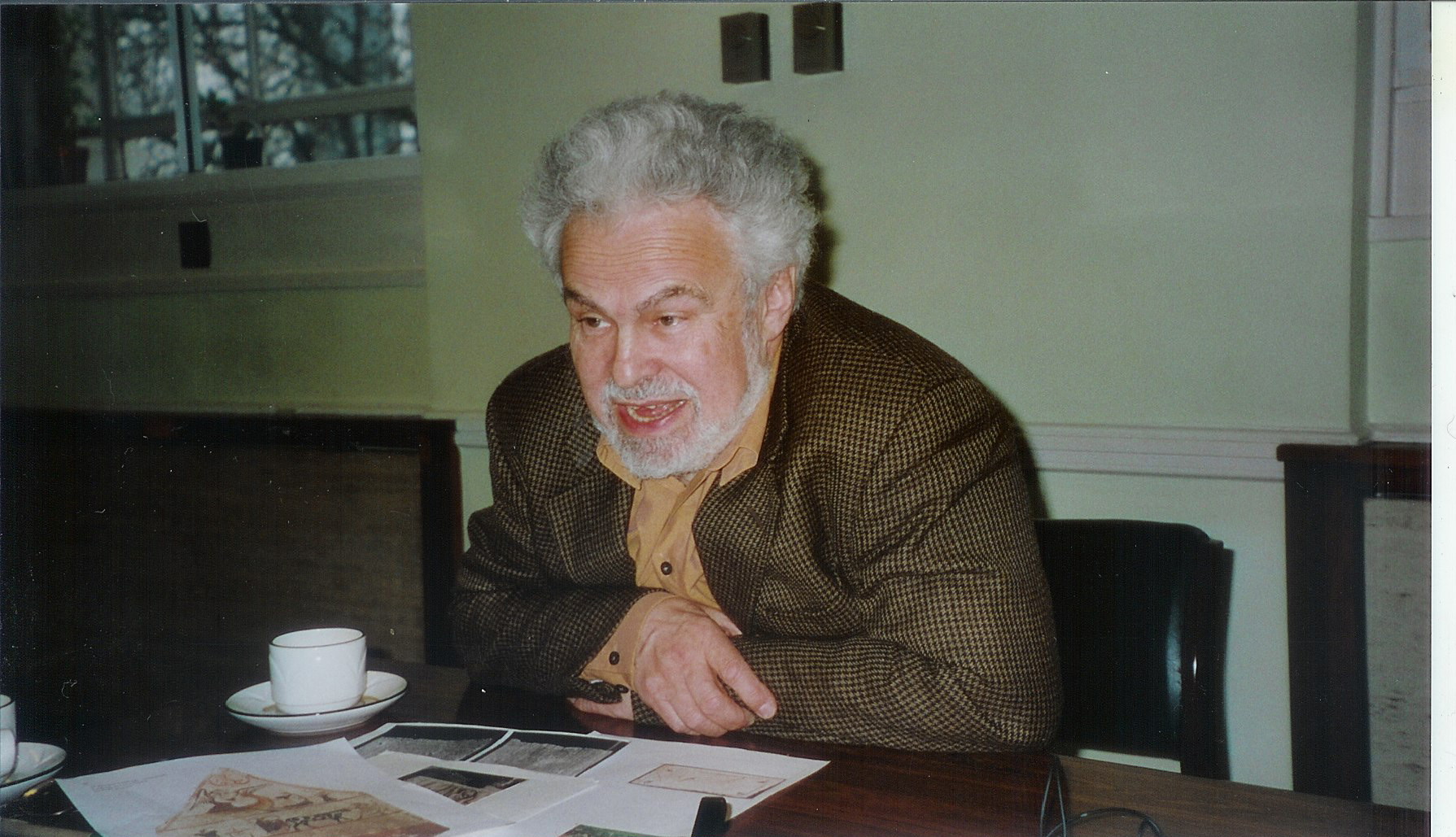 John North December 2002
« If you’re looking at a particular monument, then trying to make sense of it is a matter of knowing how it was displayed, why it was displayed, what was near it, what was its relationship to other objects, was it in front of a temple, or was it a secular space, and so on » 3.2.3
John North December 2002
« But I think that it’s the context that illuminates the image first, but once you’ve establish the sort of context where things are, then the images are restored to their place in your imagination of the space, and illuminate the space. It works both ways. But I suppose there has to be a danger of circularity, particularly if you get it wrong. » 3.2.1
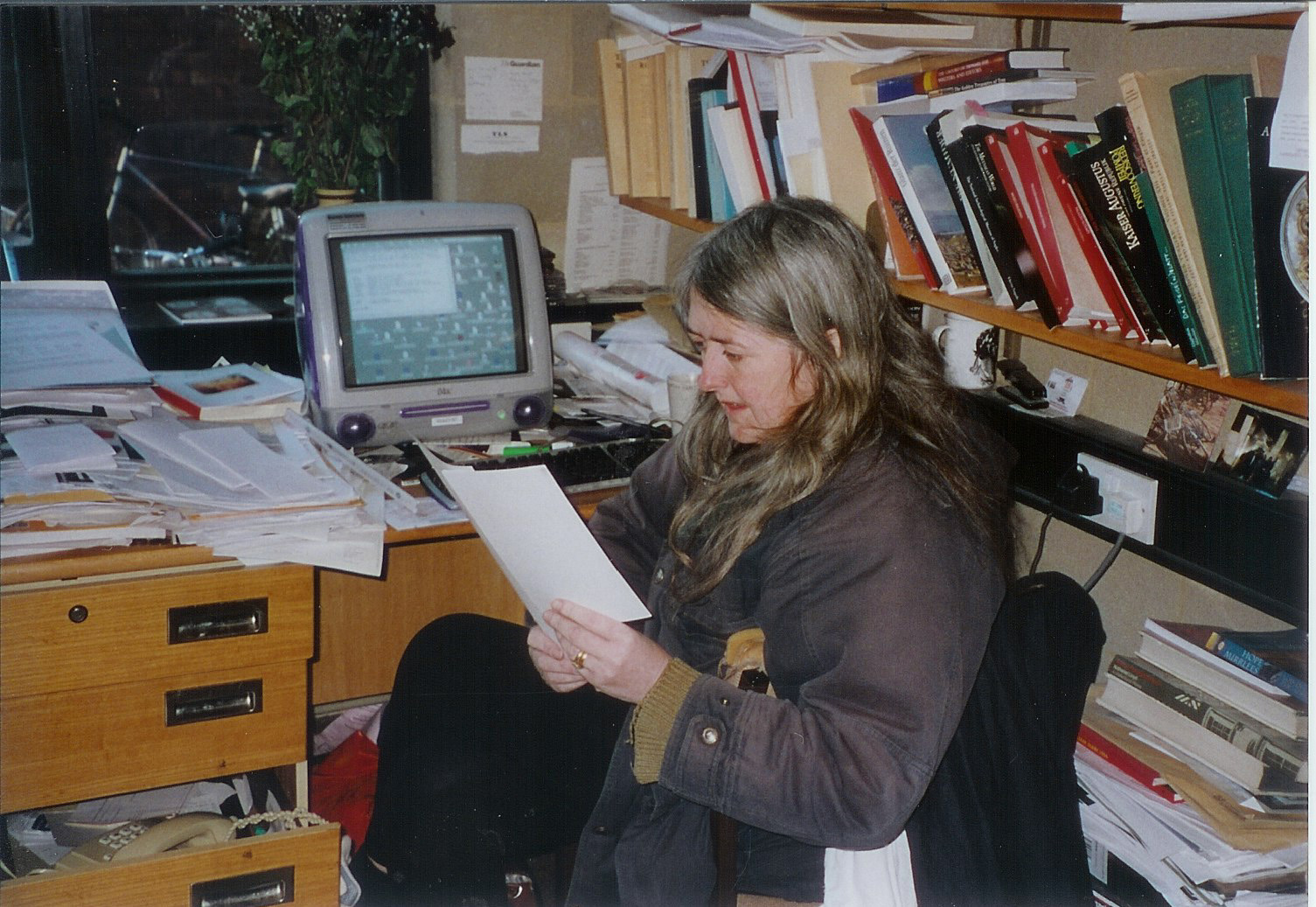 Mary Beard December 2002
« Well it’s absolutely crucial, but of course it’s easy to say of course to say that context is crucial, but it’s more difficult to deliver on it, partly because, particularly for sculpture, context changes, and that some of the context would make a difference, if a lot of the greatest Attic black-figure vases spent all their life is a cupboard. » 3.2.1
Mary Beard
« So it’s inevitably true that pots and sculptures make different senses, when seeing in different versions of their original position. You see a cult statue differently when it’s in a vestibule, or when you’re trying to make love to it, or whatever, so I think that context is obviously important, (but it’s a bit of a truism, and some people use context I think as a way of making it look sophisticated, when in fact all they’re doing is using context to limit rather than to explore. And I think that some of the work on the Greek symposium has done that. That actually we don’t know that that was the only context in which it was used, and it would make a difference). »
La lecture d’une image sculptée antique ne peut se réaliser qu’en se plaçant du point de vue des contemporains. Là où l’espace physique ne peut être nié, la perception de l’époque reste néanmoins une notion indispensable à l'appréhension de ces images. John North soulève les problèmes de lectures contemporaines des images sculptées de l’Ara Pacis, là où Gilles Sauron met en garde sur l’ethnocentrisme dans la lecture des images.
John North December 2002
«And if you’re talking about the representation of action, then there is a tremendous problem of tension between the image that they manage to put across or to represent and what you imagine the participants were doing even at that frozen moment of the action. And I suppose, going back to the Ara Pacis again, my idea about it was that it was a symbolic representation of no particular occasion and that it carries messages. But at that same time there was that controversy which was started off by Billows, which was on the assumption that it was quite beneath the Romans ever to represent anything which was not a specific occasion, that they couldn’t imagine them doing it. Why they think that is a complete mystery to me. »
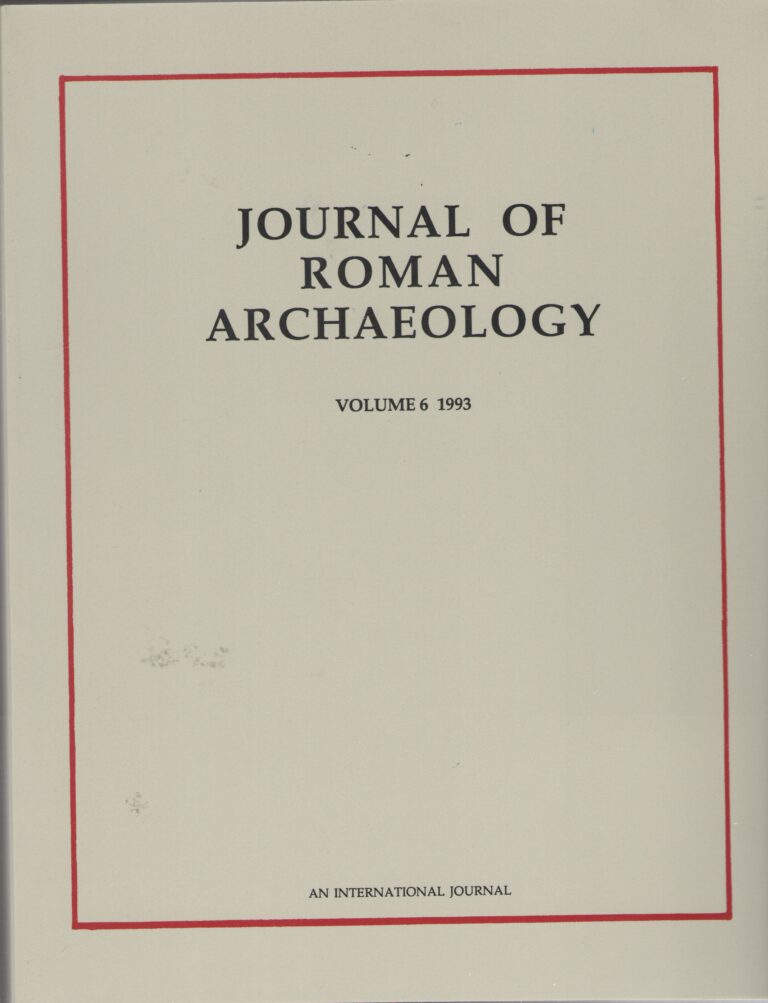
BILLOWS Richard, « The religious procession of the Ara Pacis Augustae : Augustus' supplicatio in 13 B.C. » Journal of Roman Archaeology, 1993, Vol. 6, pp. 80-92.
 Gilles Sauron June 2010
« Je n'utilise pas les grilles contemporaines parce que ce qui m'intéresse, c'est de comprendre comment les Romains voyaient les images. Pour ce qui est de la sculpture, ils raisonnaient en terme d'oeuvres célèbres et d'auteurs célèbres »
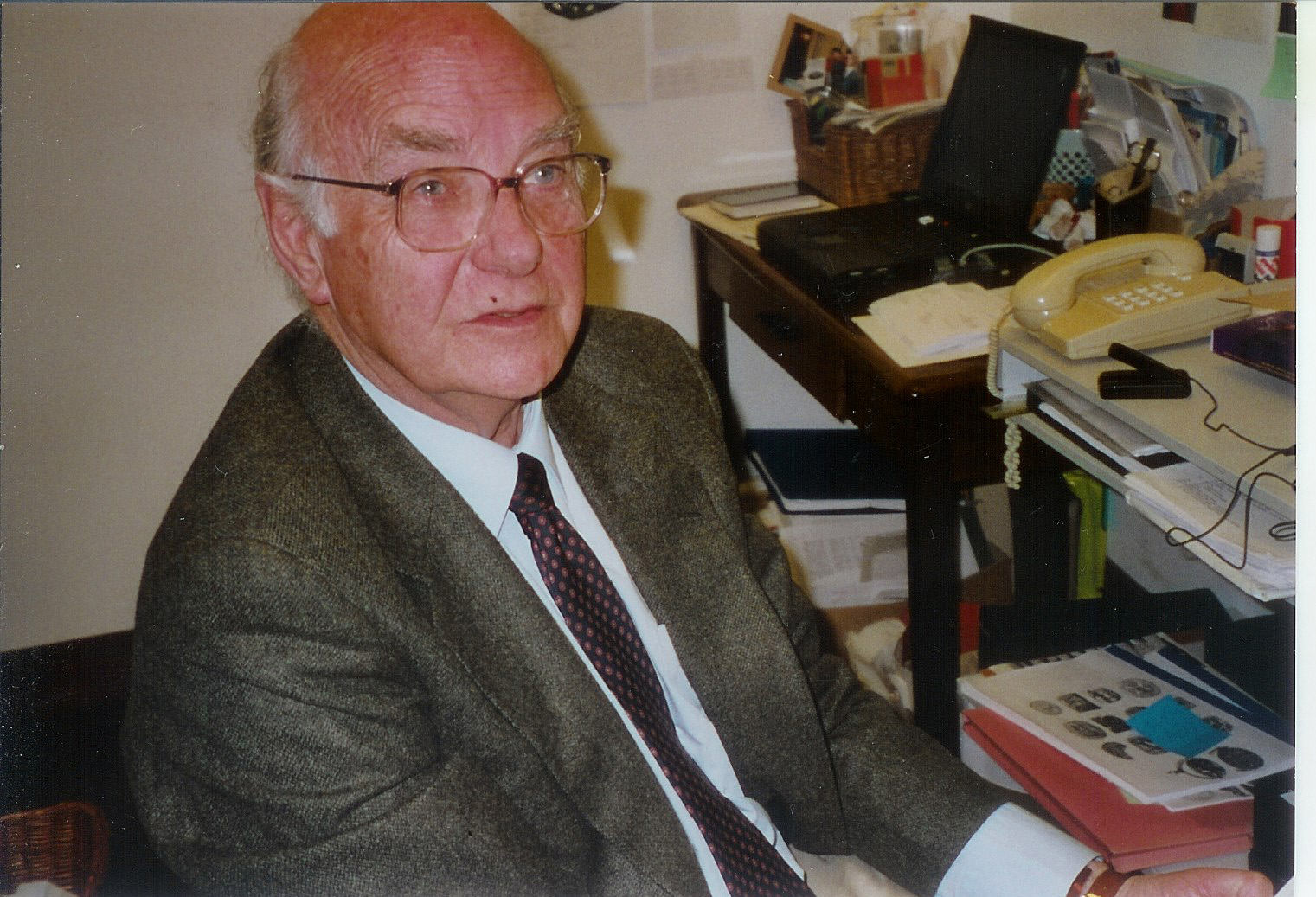 John Boardman December 2002
« I mean if you look at the Parthenon sculptures a hundred years later, they mean something totally different to what they meant when they were put up. What we should try to understand is what they meant when they were put up. » 3.2.1
À la suite de l’engouement muséologique des XIXe et XXe siècles, la question de l’exposition des œuvres sculptées devient un enjeu majeur dans l'appréhension de celles-ci. En effet, l’espace du musée s’apparente, la plupart du temps, à une vitrine d'œuvres antiques vierges de toute contextualisation, faussant alors la lecture des éléments. Giuliani soulève notamment les problèmes d’éclairage des œuvres, empêchant une lecture complète, là où John North s’interroge sur les lieux d'exposition et de conservation des sculptures antiques.
 Luca Giuliani December 2010
« Il caso dei vasi è molto banale : vorrei vedere l’altro lato e vorrei avere una luce migliore. I vasi esposti con una illuminazione ideale sono il due per mille. In genere la luce è sempre insufficiente. Ed è difficile esporre i vasi illuminandoli bene anche perché i vasi non sono fatti per essere illuminati bene » 2.1.1
John North December 2002
« I always thought that the Reacci Bronzes are a fairly improving story, because there they are, they were originally Greek, Athenian bronzes, they were on their way presumably to Rome, so the question arises of where they should be kept. And the answer is, the place where they were shipwrecked, which is pretty illogical. Why on earth…of course from the point of view of the place where they were found they’re very useful, it brings a lot of tourists, but on that basis you could simply scatter everything at random over even intervals over the entire world so tourists have to go everywhere, which of course they won’t, will they. » 2.1.4
La sculpture antique reste liée à la couleur. Si la plupart en ont perdu leur polychromie originelle, certaines en gardent tout de même trace. Sans la couleur, notre perception complète devient alors biaisée. De fait, cette question de la couleur est délicate pour les chercheurs qui doivent parfois l'envisager sans pouvoir la voir directement. Cette question se pose encore plus lorsque le chercheur ne perçoit une sculpture qu'à travers une photographie. Moreno et Cartledge ont tous les deux interrogé le rendu des bronzes antiques en photographie. Moreno parle de l'impossibilité de rendre la véritable couleur de l’objet sur n'importe quels clichés colorés, d’autant plus s’il possède une patine particulière liée au temps. À cela, Cartledge compléterait l’idée en assurant que le noir et blanc sont tout à fait suffisants pour comprendre la structure sans que l’image ne soit erronée par le rendu photographique en couleur. Linant de Bellefond rejoint son avis quant à l’utilisation du noir et blanc.
 Paul Cartledge December 2002
« Well clearly colour, but it depends on what you’re looking for. For example, if you want to start with the form of bronze figurines, a black and white image is perfectly acceptable, and sometimes can give you a better sense of the structure, and of the, the geometry of the image, for example, because sometimes colour photography is a little distorting, a little distracting.But obviously if it is a painting or vase or whatever, you want it to be colour, and ideally full colour, and ideally this sort of format. » (à propos des images publiées dans des livres) 2.2.1
 Paolo Moreno March 2012
« credo che la foto in bianco-nero, che infatti per i Riace continuo largamente (...) ecco, io credo sia impossibile ottenere una foto a colori che sia scientificamente rigorosa, (...) Quindi non è possibile col colore, come viene usato oggi, ottenere un buon esito (...) Il problema è per i bronzi, i bronzi è un disastro, lo stesso bronzo ognuno lo pubblica con un tono dal verde al marrone, eccetera, che in realtà sono anche i colori di patine diverse a volte. » 2.3.2
 Pascale Linant de Bellefond February 2010
« Pour la sculpture, il me semble que, sauf quand on a une recherche précise sur des traces de couleurs, le noir et blanc est quand même meilleur pour les publications qui traitent de sculptures. » 2.2
La tridimensionnalité de la sculpture pose problème quant à sa transcription photographique. En effet, l’œuvre sculptée est faite pour être regardée sous différents points de vue afin d’en observer les effets de relief et de lumière. Cette contrainte d’angles de vue peut impliquer une multiplicité de clichés photographiques dans le but de tenter d’aborder l’œuvre dans son entièreté. Néanmoins, cette multiplicité connaît ses limites. Photographier une œuvre ou le détail d’une œuvre en l’isolant de son contexte peut en faire oublier sa globalité et donc fausser la compréhension d’après Paolo Moreno.
John North December 2002
« I think that one of the merits of modern methods is that one can adjust, and zoom in, and I think traditional photographs of images are limited in their use, precisely by the fact that they most do it of some other size, and frame it in some way. And you always want close-ups of the things that you are interested in, which a book can never give you because it doesn’t know what you’re going to be interested in » 2.2.1
 Simon Price December 2002
« I am a great believer in the size of objects. I really object to art historical publications which come without scales. An object which has been excavated always has a 30 cm scale or something, you can see how big it is. Now I don’t think I’ve ever seen a published image of a statue or a pot from a museum with a scale attached to it. They just didn’t. It would spoil beauty. » 2.3.2
Paolo Moreno March 2010
« un caso clamoroso è stato quello del Dio di Mozia, del MelKart di Mozia statua marmorea che va immaginata con la sua fodera bronzea (...). Ebbene lì vivono ancora articoli dove si illustra il dettaglio famoso dell'orecchio, dicendo che era uno scultore che non sapeva fare l'orecchio, e quindi era arcaizzante. (...), ecco, una foto(...) di un dettaglio squadrato, un quadrato del luogo del panneggio del MelKart di Mozi dove più densamente si affollano le ricadute di questa stoffa di lino plissettata, è un plissé, (...) ecco tutto questo è un dettaglio sublime per far capire l'altezza dell'artista, e si trovano (e questo naturalmente non era negli articoli che illustrano l'orecchio), si trova quest'orecchio isolato dicendo che è, appunto, opera di un esperto, e sapete, lo avete immaginato subito perché, perché siccome il povero Melkart aveva la cuffia no? » 2.3.2
Pascale Linant de Bellefond February 2010
« Non et je suis même gênée par certains photographes spécialistes de photographie de sculpture qui arrivent à éliminer les effets d'ombres et de lumières et cela est un problème. La photographie de la sculpture est vraiment très difficile car selon l'heure de la journée à laquelle l'objet a été photographié vont apparaître des choses tout à fait différentes. » 2.2.2
Afin d'étudier les œuvres sculptées, certains chercheurs recommandent de s’intéresser avant toute chose à son aspect matériel. C'est le cas de Donna Kurtz, qui encourage ses étudiants à travailler sur l'objet et sa technique, en s'écartant dans un premier temps de ce que l'iconographie pourrait représenter.
Cette matérialité, pour d’autres chercheurs, se manifeste par le besoin de voir les œuvres physiquement pour rendre compte de leur monumentalité, tel Renaud Robert, ou bien encore de les manipuler comme Paul Cartledge. Tous deux questionnent le rapport physique face à ces œuvres.
 Donna Kurtz August 2003
« I tell them, “don’t talk about the ankle bone, don’t talk about the iconography, start with the object.” [For example,] “This is a marble low-relief. It looks to me like it belongs to the fifth century, it looks to me like it has a figure of Athena. It looks to me like it has this. It looks to me like it has that. I conclude that it is probably this.” I don’t let them start talking about the iconography first. I always make them go to the material, and then try to place the material. » 3.1.4
Donna Kurtz August 2003
«And I always encourage them to start with the most [obvious questions]: What is the material? (...) What is the technique for the decoration? (...) What is the form of the thing? Is it a statue, is it free-standing? Is it male or female? What is it wearing? And build up to what the iconography is, and then as the final step, if it’s something that is associated with a particular person, but it’s all a progressive logical step, reckoning that this will keep them from making serious mistakes, which you do if you have a reflex reaction, particularly a student who is studying for an exam- they are tired and they will have this instant reflex to an image. They’ll start writing about the one they think it is, rather than the one that’s in the photograph. » 4.4
 Renaud Robert April 2010
« Le Sarcophage d’Alexandre à Istanbul. On a beau le voir en photographie, cela n’a absolument rien à voir avec le sentiment que l’on a quand on le voit en vrai, parce qu’il y a une monumentalité, liée à la taille, à la proportion des différentes parties entre elles, qu’aucune photographie ne peut restituer. L’impression de monument, qui fait comprendre pourquoi c’est un sarcophage royal, on ne l’a qu’en voyant l’objet. » 2.1.1
Renaud Robert April 2010
«Par exemple, concernant la monumentalité, la taille n’indique pas l’effet que peut produire un objet. Un objet peut être petit et impressionnant, grand et anodin. Cela est une question de proportion. La proportion, on ne l’apprécie que quand on voit l’objet. Aucune représentation et aucune description ne peuvent suppléer la vision directe. » 2.1.3
Paul Cartledge December 2002
« Absolutely if it’s possible, there’s nothing like handling an object. This comes from my research where obviously I was handling the primary material. What we don’t have is any notion of what they would have looked like in the original context or contexts, but it’s a completely different thing to look at something and to take it out and handle it and turn it over, and upside down. » 2.1.1
L'étude d'après des œuvres antiques est une part prééminente de la formation des artistes européens depuis les fondations des premières académies en Italie au XVIe siècle. En témoignent le nombre croissant des moulages, ainsi que des nombreux voyages d'artistes en Italie et en Grèce. Ainsi, des sculpteurs emploient les œuvres antiques comme des supports pour leur propre production artistique. De cette manière, Paul Cartledge qualifie le travail de Michel-Ange comme celui d’un historien de la sculpture grecque et romaine.
Paul Cartledge December 2002
« There’s a good example, Francis Haskell and Nicolas Penny wrote a book called Taste and the Antique, and it’s a study fundamentally of Renaissance art, but where Renaissance sculptors and painters knew, or had seen – presumably had seen – mainly Roman copies actually of Greek sculptures, but they had been influenced by those. So you have two sorts of genealogy: one is the original, which meant the copy of the ancient artefact, so the history of its discovery, and then the history of its reception and reworking its transformation, which sometimes might be the same thing. In other words, suppose scholarship on an image is actually giving rise to new images. So Michelangelo is a kind of historian of ancient Greek and Roman sculpture, as well as a practicing sculptor. » 2.3.1
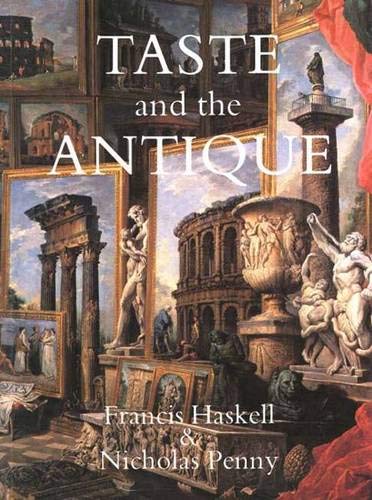
Francis Haskell, Nicolas Penny, Taste and the Antique: the lure of classical sculpture, 1500-1900, Londres, Yale University Press, 1981.
La sculpture antique fait l'objet d'une production sérielle. La diffusion de certains modèles en Méditerranée amène les historiens de l’art à aborder une grille de lecture en série, notamment à l’aide de catalogues d’images. Si certaines images peuvent s'appréhender de manière isolée, les séries peuvent révéler une cohérence dans la production des images, notamment dans l'émergence d’un type particulier d’iconographie. De plus, les copies antiques permettent l’étude de sculptures disparues, soulevées notamment par Moreno à propos des bronzes du Pirée. L’analyse de la production en série permet également de relever les standards antiques comme le souligne Angela Pontrandolfo.
Paolo Moreno March 2010
« Cioè il meccanismo di confronto io lo faccio sortire solo nel progresso di tempo, quindi nel caso di Lisippo, poniamo, abbiamo un'opera giovanile, un'opera intermedia, molte opere soprattutto tarde, e alcune opere giovanili si capisce che sono di Lisippo solo perché assomigliano magari a un'opera finale. Allora (...)c'è la tentazione, appunto, ponendo un'opera degli inizil'Eracle che s'incorona, che ne so, di confrontarlo subito con l'Eracle vincitore del leone, che è sicuramente una derivazione tarda di Lisippo che, in realtà, è il caso di una illustrazione che dimostra, che illustra, che fa da supporto all'idea. Io ho il coraggio di non mostrarlo subito, lo dico naturalmente, ma non ci metto la figura, metto la figura giovanile accanto a quella finale, ecco, la metto solo lì in modo che uno leggendo non abbia il singhiozzo, perché se no vede Lisippo giovane e vecchio, giovane e vecchio, giovane e vecchio. Vede Lisippo a venticinque anni, a trent'anni, a quaranta, a cinquanta, eccetera, siccome era vecchio (...), e quindi all'ultimo era il manierista di sé stesso e allora ha ripreso l'Alessandro e l'ha fatto diventare l'Eracle col leone. (...)è far vedere l'immagine come le ha pensate Lisippo. Quando lui ha fatto quella non pensava che avrebbe fatto poi quaranta, cinquant'anni dopo l'altra(...) » 2.2.2
 Angela Pontrandolfo June 2003
« I sarcofagi romani per me sono come la ceramica attica di serie. C'è un modello culturale forte alle spalle che però, come dire, è già passato da un grado dieci a un grado inferiore e a quel punto non è detto che le stesse immagini… » 2.2.3
Paolo Moreno March 2010
« No, non ci sono. Sono sembrate quelle appunto venute dal mare e che oggi si sono difesi nella loro impotenza dicendo appunto Non sono confrontabili certe volte, invece sono tutte confrontabili. Intanto si cercano le copie...per esempio i Bronzi del Pireo hanno l'Artemide, l'Athena, hanno le copie di marmo nei musei, quella di...l'Artemide ha una copia a Salonicco, gli italiani non la conoscono, ma i greci l'hanno segnalata, sta lì e non è illustrata insieme ai bronzi. » 3.2.3
Angela Pontrandolfo June 2003
« Allora c'è da mettere in gioco, in questo caso c'è da mettere in gioco la produzione. I sarcofagi romani, per me, come le immagini della produzione di serie della ceramica attica, è come il crocifisso, il crocifisso può avere un valore eccezionale, come può essere un crocifisso utilizzato per pura routine senza nessun significato ideologico. E' il contesto. Allora l'archeologia non sempre riesce a recuperare il contesto, però credo che dobbiamo ragionare in questi termini altrimenti...E poi le produzioni di serie funzionano se si vede che cosa è non di serie nello stesso momento, e quindi ecco il gioco, credo che è un gioco quello delle immagini, è un sistema no? Penso, non so se siete d'accordo? » 2.2.3